Tuesday, March 22, 2011

Los Pollitos Dicen...

Boy, what a couple of weeks I have had! Being on back-to-back medical brigades with the Timmy Foundation for two weeks makes time fly by so fast. It is now the end of March and I have only a few months left before getting to come home and visit in July. So here's what the last two weeks have been like in my Ecuador lifestyle...

Right before the first medical brigade which traveled to the Napo province of Ecuador from March 6th-12th, I got my first taste of the Latin American celebration of Carneval, which is the equivalent of Mardi Gras. Carneval boils down to a big food/water fight, whenever, wherever you are during the two or three days before Ash Wednesday.  I "played Carneval" on Saturday in Quito with José, a group of people who work with the Centro where I live, and two German girls who happened to be staying here for a few weeks.  It started with the German girls and I leaving to go eat lunch, being assaulted by paint/water upon leaving the Centro, and returning with cans of foam and confetti - which started the larger, Round 2 of Carneval.  After using anything we could get our hands on (sugar, avocado, soup, coca cola, buckets of water, etc), I was soaked from head to toe, my hair was a mess, and I had an egg smashed on my head. See photos below:


After my intro to Carneval, I joined the Ball State University Timmy chapter to the Napo province of Ecuador, which is a far east province of Ecuador and is considered to be a boundary of the Amazon. As our tour bus entered the towns (and throughout the first two days of clinic) our bus was sprayed with hoses and the target of water balloons as we passed by Carneval players. It was always very funny, as our windows were open due to the hotter climate in that region,  when unsuspecting trip goers would get a quick splash in the face.

The Ball State brigade was a fantastic success. The group of students was really great, and everyone got along really well.  We had a good team of professionals, and we saw four new communities which we will likely now start going to every two months come May.   One morning I woke up first, went into our bathroom, undressed to take a shower and hopped in the shower. Upon turning around (now facing the rest of the bathroom), I noticed a rather large mouse running freely in the bathroom, attempting to escape, and very afraid of me. I didn't quite scream, but I did say "Oh my gosh, oh my gosh!" a couple of times, turned off the water, and tried to figure out my next move (as the mouse was at the door attempting to escape through my only escape route!). Luckily and unfortunately, I had placed my clothes in a pile on the floor. The mouse (again, a rather large mouse), spotted my pile and burrowed himself in it.  Knowing that he was afraid of me and wasn't going to come out of the clothes pile that he had now made his home, I turned the water on and continued to shower.  After I got out, four more women used the same bathroom to get ready (all were aware about our little mouse friend), and he never came out.  Thinking the people in charge of the hostal would have the mouse out when we got home from clinic, we came home and opened the bathroom door, then letting the mouse loose in our room. Luckily, within only a few more minutes a boy tripgoer and the guy in charge of the hostal coaxed (scared) the mouse out of our room and we were finally mouse free!!

I absolutely loved the Napo communites that we went to. I loved the climate (which is much hotter and humid than Quito), the air is cleaner and the altitude isn't a factor. I was even able to run for 45 minutes straight, which I do not think I have done that since I arrived in Ecuador!! Our partner organization (which is actually the local Napo province government and a hospital started/run by nuns called Archidona) is fabulous and very easy to work with.  I absolutely fell in love. Its just the whole thing that I'm not a city person, and technically I am living in a large, sprawling city right now. .I also started learning some Kichwa while I was in Tena. That's the indigenous language. So far I've only gotten a few phrases down, which are "Ima shuti kangi?"(what is your name), "Nuca shuti Emily" (my name is emily), "Imazna watara charingi?" (how old are you?), "kaima shami" (come here), and the easy ones "alli punja, alli chishi, and alli tuta"(good morning, good afternoon, good night).  Of course, the problem is I can ask questions but I have no idea what the response is.


One of the BSU students with kids from the site San Miguel de Palmeras

El río Talag, a very clean river that feeds into the Napo river. It was beautiful. I took some time in the afternoon (since this was Friday, our hottest/stickiest clinic day), to kick off my shoes, roll up my pants and soak my feet in the water for 10 minutes. Que fresco!


A little girl at our site on Wednesday. It was actually very cold that day, so I can't believe she was standing there in a tank top and without shoes on! You can see the fog in the background (we were pretty much in a cloud).
Other highlights from the Tena brigade included tubing down the Napo river (starting from the river beach in Misahualli, the town where we stayed), riding in the back of truck beds to one of our sites because the tour bus couldnt reach the town, going across some sketchy bridges that sank and creaked under the weight of the bus/trucks, going to a zoo and seeing some Amazon animals such as a Capybara (http://en.wikipedia.org/wiki/Capybara ), riding in motor canoes, and just being warm all day long for the first time since I've been in this country!

We returned from the Napo province on Saturday, the 12th, which is when the Purdue brigade was supposed to fly in. The BSU group was going to be flying out on the same Delta plane that brought in the Purdue-Quito brigade. However, they missed their connecting flight in Atlanta and weren't going to come until Sunday. This is where things got tricky!

I wake up Sunday morning to come to realize that Alana has got a really bad stomach bug from eating a frozen fruit pop in our last community in Napo.  She is down for the count. I am in charge, with Pablo, of leading around the three medical professionals who did make it to Quito on Saturday - it was actually quite a lovely day. We went to La Ronda for lunch, toured a church I had never been in before which was absolutely beautiful  http://es.wikipedia.org/wiki/Iglesia_de_la_Compa%C3%B1%C3%ADa_(Quito)
then went to the basilica to climb the top of the tower. We got coffee and dinner in La Mariscal (gringolandia), and then after dropping off the three of them back at El Centro, I went to Alana's apartment, got a 30 minute crash course in how to pick the group up from the airport/how to pack for the first day of clinic/how to run the first clinic day.

I went to the airport and was super nervous. I was very unsure of what I was doing and out of my element. Pablo was there with me and sort of helped me feel a little calmer. After we were waiting for everyone to come out of customs for awhile, he told me I needed to use my "gringo power" and bust through security to find out what was taking the group so long to leave (only four people had made it out).  I decided I like the term "gringo charm" much better than gringo power, so that's what I used.  I got through and found the group, and saw that they were all filling out customs forms - their bags had been left in Atlanta.  TWENTY-ONE of 29 suitcases had gotten left behind. Uh-Oh. These suitcases had all of our medicines and supplies that we would need for the brigade, and only 8 suitcases had made it through. I was a little flustered/stressed.  Luckily I've been living here for nearly 6 months and my Spanish is good - if I had had to do this when I just arrived I wouldn't have had any clue what was going on!
We all hop on the bus, and I go through the intro/welcome spiel. I was still super nervous. We are getting into Quito Sur, when the bus gets pulled over. It is 12:30am, the middle of the night. I am very unsure of what to do. Luckily, it was just something silly that the police said (buses can't be on this road past 8 pm...as we were stopped, at least 2 other buses passed us), and we didn't get ticketed, although Don Alberto,  our driver, was really flustered for a while. We get to the Centro, and we have to start getting everything organized for the next day, our first clinic day. We are in a cramped space (we didn't have our normal med packing room which is about 4 times the size of the room we were in), and everything was relative chaos. Most people started getting to bed around 3, I got to bed at 4pm and woke up at 6 to shower for the first clinic day. I'm still on my own for the first clinic day, which is always typically the slowest day, and we only had three doctors instead of four.

And as it turns out, it was a very slow day indeed. We were scheduled to eat dinner around 630 pm, and we did not sit down to eat unil 8:15pm.  Luckily Alana was there to help me out Monday night when we got back from clinic. Plus, I had to go to the airport with Pablo to pick up all the suitcases. After dinner I started talking to Marco and José, and started bawling. It was a lot of stress that first 24 hours, everything that could've gone wrong went wrong! José offered to come with me to the airport, and I willingly accepted his offer. It was a good thing too; Pablo and I really needed a third person! I was able to use my gringo charm once again, and everything went really well picking up the suitcases. I even got the head customs officer to make 18 copies of passports for me! He said I owed him an ice cream to cover the costs. I got home at around 1:30am, and almost all of the Purdue students were up waiting for me to help get the suitcases into our make shift bodega.  That was so incredibly nice! From there, the rest of the brigade started going smoother each day.  Unfortunately Alana got sick again at the end of the week (Friday and Saturday), but by then I was much more comfortable leading the group. I also got to put an IV in her, which was fun. It was my second of the week, on Timmy trip goers. 

After the Purdue group was sadly back on the plane, I returned home to get some rest as I was back to work at the hospital on Sunday afternoon.  That shift went fine, crazy busy as always. We have been seeing on average 80-100 patients these days.  Monday night I had a night shift, so it was this morning I was leaving my shift when they placed the last straw on the camel's back (they being my boss, and the boss of all the nurses).  When my boss, Sandra, came into work this morning I mentioned something like I was so happy the schedule was changed back to how it should be (having three days off, three days on). She said something, kind of with glee in her voice, that she was still changing the schedule and that I needed to go talk to Lic Benavides, the boss of all the nurses. I was leaving work after breakfast and I ran into Benavides, so we went up to her office to talk. We sat down, small chatted for 30 seconds about how it was going to Tena, and then she told me that I was only going to be working until the end of March and that I was not being put on the schedule for April (hello, April is next week).  I had told her and my boss several times I was planning to work until the end of April (my Timmy job doesnt start until May), and they knew that. They agreed to that. They told me "al partir del Mayo...." I would work as a replacement. I know that they knew and agreed to have me work through the end of April, or else why would they be calling me into Benavides' office on March 22nd to tell me I was only working for one more week???? I instantly started crying, mostly because I felt betrayed, but also because I still have rent to pay (and I have enough in my bank account here to pay for at least two months rent, but it's still the principal that they are telling me a week before the end of the month that I would no longer be working there), and because they were lieing to me.  That bothered me; it's not right, it's not professional.

So I was crying, and telling Benavides she knew the whole time. She calls up my boss, who couldn't even lie about the fact that she knew the whole time I was planning on working through April and we had agreed on that.  I just felt betrayed. Even typing it right now I want to cry. I've done so much to be here. Everything I have left at home to come down here, my best friends in the world, my family who loves me so much, a good job as a nurse in the States, having convenience and hot water and an income that allows me opportunity, just in general leaving a multitud of opportunities for how my life could be right now...I left all of that to come work here, and they have been disrespectful. They didn't even try to understand what I'm going through at all.

Luckily, I'm getting pretty fluent in Spanish. That's one of the main things I have gained from working at the hospital. Clearly there's a ton of vocab I don't know.  And I still have to clean up my Spanish, and learn to properly use subjunctive phrases, and properly put my "lo, la, le, se" in the correct place, but for the most part it's much easier for me to communicate than when I got here, and is continually getting better. Sometimes though the very few "highs" I have had here do not make my very low "lows" any easier. It's been a tough, tough 5 months, and I will be completely honest about that.

I miss home.

Thursday, February 17, 2011

Timmy video!

http://vimeo.com/19580126

Carrie Underwood Obsession

I have realized since arriving in Ecuador that Carrie Underwood is the best singer in the WORLD!!! I love every song she has ever created. Then I went back and watched her American Idol audition, and she was amazing and it made me even more in love with her music. She is incredible!

http://www.youtube.com/watch?v=6-w-5J_TUD0

Monday, January 31, 2011

Yo les invito a todos, pero cada uno se mata su toro

That translates to "I'm inviting all of you, but each one kills their bull" . That is a phrase used here when you are talking about going out to a dinner, going out for drinks, or just in general if you are the one talking about going/doing something and are inviting other people. It's to say, I am inviting you, but you gotta cover your own bill.

Today was the hardest day of work I have had so far in my three + months of actually functioning in the role of a nurse.  It was actually a night shift from 1930pm-0730am, but the nightshift was pretty calm (we had about 38 people in our ER during the night). We didn't have any true emergencies, but we did have alot of belly aches and urinary tract infections. Literally at about 07:33 am, in came the only emergency we had; unfortunately it was already too late. In the relative calm of the morning came running in a grandmother and mother combo (the mother in her teens), the grandmother holding a baby wrapped in a fleece blanket crying saying "our baby is dead, our baby is dead".  I was the first to come to the patient, grabbed the baby who was flaccid, pallid, not breathing, cold, had a bit of milky whitish secretion coming from one nostril, and as we came to see once we removed the blank, had cyanotic streaks forming along the left side of the body around the pelvic/lower abdominal area. We ran into the Unidad de Críticos, our critical unit where the crash cart is and where supposedly all of the supplies we would need for an emergency are.

This baby, of three months, was realistically already dead and we didn't know for how long, but we began efforts to resuscitate. I grabbed the pediatric ambu bag, and the doctors began CPR. Margarita, the other nurse, and I tried to look for peripheral IV sites but were unsuccessful. By this point, the doctors/nurse from upstairs in Neo (NICU) had been called down. We probably had 10 or so people in the room by that point. I prepared a syringe of Epi diluted, and efforts to put in an IntraOsseous iv were started by one physician by using our #18 gauge introcath needles, which were too delicate to puncture the calf bone, and the efforts (4-5) were nil. #18gauge is the largest needle we use; we don't have #16 or #14 gauge needles readily available from our locked stockroom (that only 2 people have a key to). The baby had no saturation, at this point was intubated but without any IV site we couldn't pass any Epi. It was, even though probably hopeless from the start, one of the the worst codes I have seen. Very disorganized, and like always, we were running around for supplies that we just didn't have enough of in our "Critical Unit". The boss of all nurses, Lcda Maria Teresa Benavides was there to witness it all.

The saddest part about all of this, is that this same baby of three months, was in our ER the day before, and had been discharged at about 10pm with a diagnosis of pneumonia.  It had literally left our ER at 10pm alive, and returned at 0730am, dead.  Due to the state of the baby upon arrival, and the milk that was escaping from the nose and the whitish secretions that we removed from the lungs via suction during the code, it was evident that the baby had aspirated on his mother's milk, most likely from spitting up after feeding and breathing in the liquid without the mother knowing, and thus went into respiratory distress, respiratory arrest, to cardiac arrest. It likely had little to do with the pneumonia diagnosis, but clearly that baby was already in a compromised state of health, and who knows where the blame lies. Should that baby have been hospitalized the night before? I do not know; although I did see that baby the night before, I didn't attend to it or the family in anyway whatsoever, so I didn't know the story of the baby at all until the morning. I do know however, had that baby been hospitalized, it would be alive right now. Was it just poor timing that the baby was sick and just so happened to aspirate the morning after a hospital visit? Were they interrelated incidents? Was there something we could have done in the morning or was it really a hopeless effort?

When the young grandmother entered crying, she started saying the story how they had been there last night and he had recieved an IV and oxygen and all this treatment and now he was dead...she even pointed to me, and said "you were here last night, you know what they did to him last night!" which was true, I had been there the night before (I stood out as the gringo in a pink uniform, so clearly she recognized me), and that was when I connected the stories. It was very tough. What made it worse was after the code, we had a "meeting" with all the personnel (minus the doctors) who were there at that moment, and with Lcda Benavides, to discuss how we didn't have the supplies, we were disorganized, how everything went bad. Well Lcda Benavides, sorry to say it but this is how every code is. We are always leaving the "Critical Unit" to get other supplies. It was a blessing that she at least saw the disorganization, because at least now she knows. But, like always, that "meeting" was a circle of blame, with the subject of conversation centering back to the SAME dumb topic that we have talked about for the last three months: that we are billing patients incorrectly and therefore not having enough supplies.
Now that I am much more fluent in Spanish and have observed enough of our department and how it works, I think I have the ability to finally make my case heard. My Spanish, I believe has been accelerated by times when I am all worked up like today, after bawling in the supply closet, I went to breakfast with Margarita, the other nurse, and Diana, the technologist who I had worked that shift with. At breakfast, we discussed what happened, among other topics, and I didn't hold back anything on what I was saying; I was capable enough to express all of my thoughts without being frustrated. It was kind of like our debriefing session that we probably should have had in the ER with the rest of our employees, but I don't think the "debriefing" idea has really hit Ecuador yet. What I've realized today is that I can't continue to sit back and have problems with my boss; if she, Sandra, doesn't want to change anything then I am going to have to go above her, to Lcda Benavides directly. We are dealing with people's lives, y punto.
Three months.
The amount of time I have worked in this ER; the same amount of time that baby lived.
Two totally different perspectives on an equal amount of time.

Thursday, January 27, 2011

Quilotoa Hike

Hiking 7.5miles around Quilotoa lake/volcano. This is located about 4 hours south of Quito.

I went on the hike with Alana, current Medical Brigade Coordinator for the Timmy Foundation, and a group of "montañeros" or people interested in mountaineering, called Zona Verde.

Just a beautiful photo

This photo was taken upon arriving at the top of the highest point during the hike, and after finishing the hardest part of the hike, go Team America, we were the first people up!

This was not a friendly hike like I had been on before with pretty switchbacks, wide paths, and steps cut into the path to make it easier...this was a legit just worn down path, that was very steep and rugged!
Quilotoa was the hardest hike I have ever done in my life! It took us 4.5 hours to walk around the 7.5 mile loop, and then we also hiked down to the lake and back up (25 min down, 50 min back up), which was sooooo hard because our legs were so sore already! I likened it to how I felt after running the marathon, that is how sore I was! I also am out of shape right now, so that certainly didn't help. I desperately need to start working out again!

Tuesday, January 25, 2011

Ecuadorian Breakfast Club

So, as everyone well knows, the longstanding Breakfast Club tradition held on game-day Saturdays at Purdue University is a favorite pasttime of mine...one could even go so far as to say it is a cherished passion in my heart. Dressing up in homemade costumes, waking up at 6 in the morning to stand in line, getting all messy dancing around in Where Else? and then bar hopping until getting kicked out of Jakes when "normal" customers begin arriving around 11am., I have very fond fond memories of those Saturday mornings.  So, when walking to work on various Saturday and Sunday mornings at 7a.m., I noticed that a local little tienda called Viveres Lorena hosted some sort of crab breakfast, and there were often people visibly drinking outside on the sidewalk. I thought, "bingo!", there is my Breakfast Club location. I had already brought beer pong to Ecuador, or at least to José, and thought it was time to move on to a bigger challenge. Unfortunately I have a very small pool of people to inform here in good ol' Quito Sur, so I ended up only peaking the interest of four other people. That did not stop my dream!

We arrived at Viveres Lorena at 7:15 in the morning (without los disfraces, or costumes), and promptly had a bowl of crab broth with a crab sitting on top, set in front of us. I ordered the one 24 oz. beer, which we all split. Unbeknownst to me, everyone who came with me actually had other plans for that Saturday which they had to attend to after our breakfast, and could therefore not partake in some friendly chupando, or a slang term for drinking (it really means sucking, but in certain context it is used to say drink some beers).  I was sadly disappointed by the amount of meat in the crab, because their wasn't much, but it was my first time eating a crab and therefore my first time whacking the crab with the little mallet, which is super fun and a totally redeeming quality of eating a crab! The crab boil that Viveres Lorena has every weekend is called "una cangrejada", el cangrejo is spanish for crab. I could probably have done without the "caldo de cangrejo", or crab broth, because it was filled with conchas, or mussels (I think), and I am not very fond of those.  All in all my "Ecuadorian Breakfast Club"only met one of several requirements to actually be considered Breakfast Club. That is, I taught my fellow BClubbers to play a card game called Screw The Dealer, which is an extremely easy game that can be played with large groups of people and in loud settings, which makes it perfect for bar scenes. Costumes, no. 5 a.m. wakeup call, no. Drinking, no. Loud, noisy bar scene with 80s music and crazy dancing, no. Laughing, yes. Card game, yes. Good times with friends, yes. I guess it met more than one requirement afterall! See photos below:

Outside of Vivires Lorena.  Lorena, the store owner, is sitting on a stool just inside the door, like always. I have chatted with Lorena a couple of times. She told me the weekend before there had been a Gringo (white male) at the cangrejada. Unfortunately, she had no other details to share with me, so he is now "mystery Gringo".  I think the lady serving crabs is her sister, and the little boy in the green sweatshirt is that lady's son.

Poor Mister Cangrejo...about to be devoured.

All smiles on this Saturday morning!

Lupita and I, with our cangrejo friends.

Marco, aka the Spanish version of Papa Joe.

Sunday, January 9, 2011

Fuimos a la Playa!!

View of the beach and city of Manta, capital city of Atun (tuna)

Other side of Manta beach, the fish market

José and I on the bus! Only almost 9 hours to the beach.

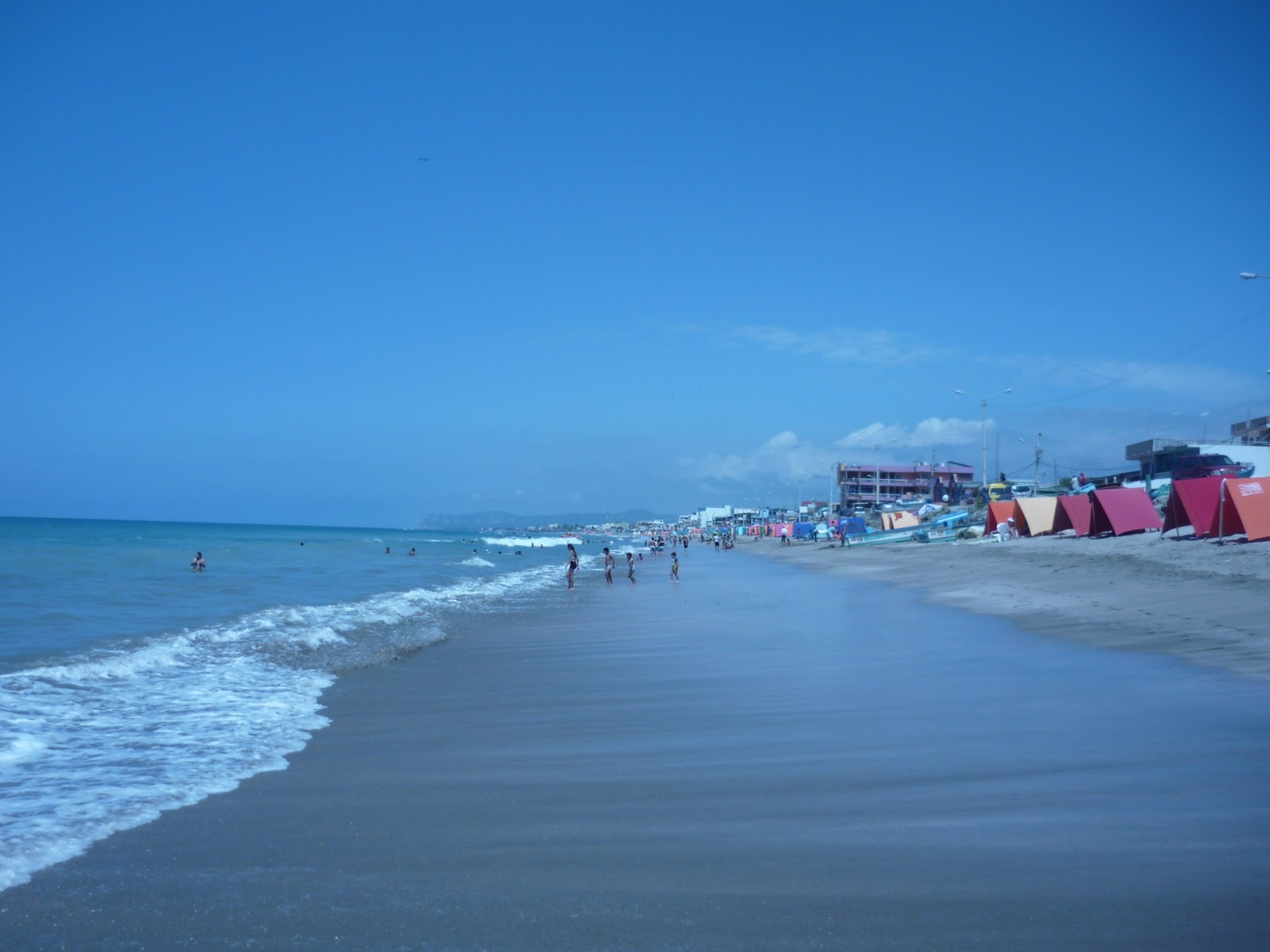
View looking North on Crucita Beach

The hostal we stayed at directly across the street from the beach, $15 a night...which was actually really expensive because it was the holiday (New Years)

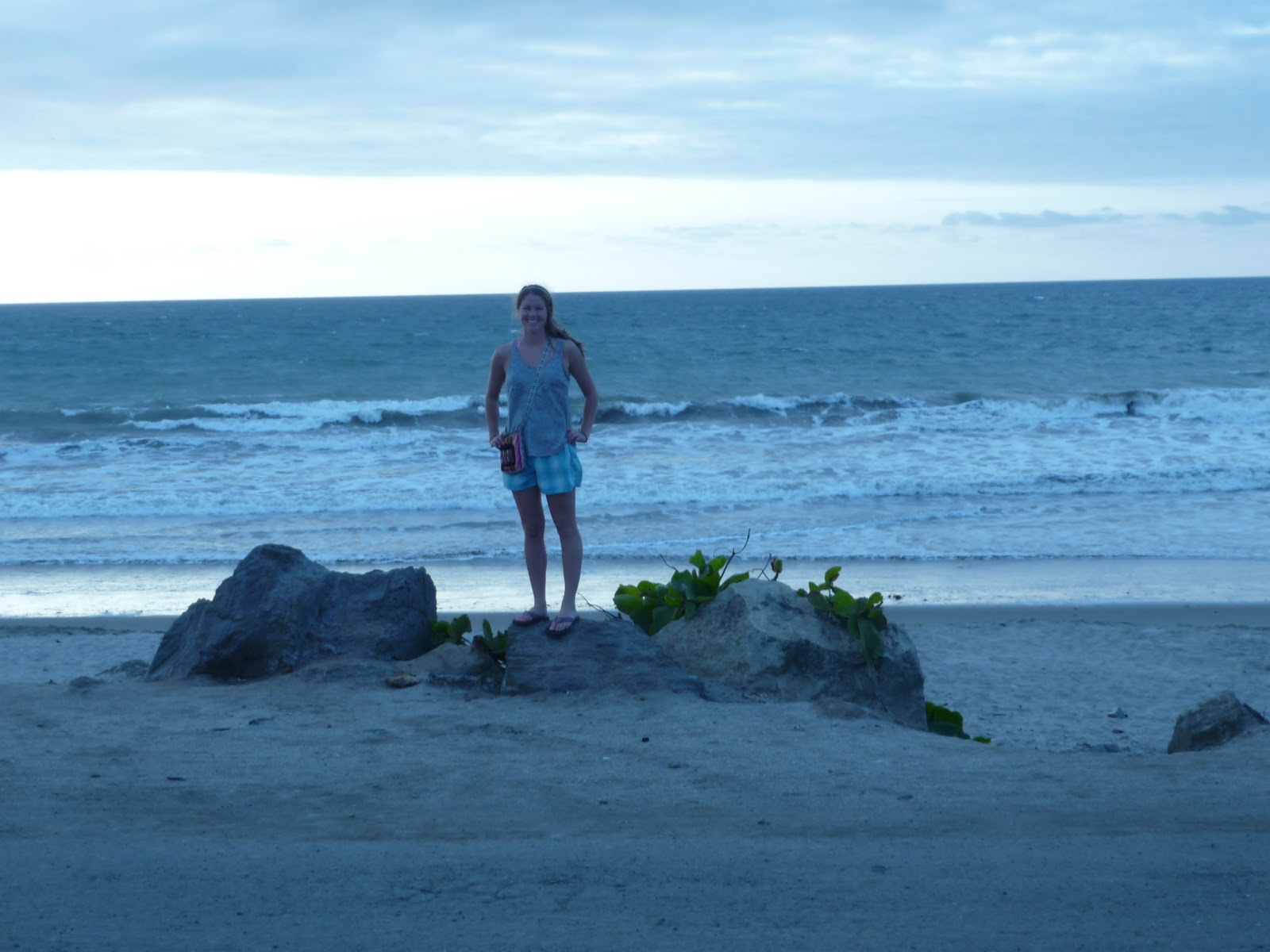
Proof that I went to Crucita

Yay, a sunset!! I don't see sunsets in Quito, the mountains block it and normally it's cloudy or raining at that time of day!